Project Cancellation Fees are not another tricky revenue strain for CROs
CROs always have to include in their budgets an average cancellation rate of about 3-5% of each quarter’s beginning backlog, Jason Montelone points out in his inspiring article about project cancellations in the clinical outsourcing industry.
So if your CRO is asking in their MSA for an early termination fee: think twice, before you as a sponsor refuse to accept this and brush this aside as just another dirty trick to gain more revenue. Reason:
- the business driver of a CRO is to gain more business and not to make money out of lost projects
- a small and mid sized CRO can quickly experience serious financial damage in case the average cancellation rate is exceeded
It is clear that a termination fee is an easy way for the CRO to reduce the risk of early project contract terminations. Of course: this is not the only opportunity a CRO has to mitigate project risk. CROs have several opportunities to hide additional sources of profit in their budgets. A sponsor could always argue that any cancellation risk shall already be factored into the rates the budget is based on.
 The key question in contract negotiations is: How can we develop a fair deal that respects the inevitable need of a CRO to mitigate the financial thread by project cancellations and also address the legitimate interest of the sponsor to avoid any additional costs for cancelled projects that are already a wast of money? It is important to understand that this fee shall not be a penalty but an average amount reflecting the real cost of the cancellation.
In good negotiations the parties involved shall always respect the legitimate interests of both sides and shall develop a solution which is acceptable in view of the various sensibilities and interests at stake. We call this „Fair Deal Negotiations“ and this is more than just Harvard’s Win-Win deal approach. One opportunity in this example of early termination fees is to accept the cancellation fees but to open up an opportunity for the sponsor to avoid the fee without any disadvantage for the CRO: in case the sponsor can prove to provide new business to the CRO that is valuable enough to compensate the lost revenue from the cancelled project the cancellation fee shall be waived. Negotiation is over and everybody leaves the table with a smile. Mission accomplished.
In discussions I had with larger CRO management contacts it turned out that a rapid loss of revenue might cripple a small CRO, but in larger CROs the available staff gets absorbed almost instantly onto other projects unless they are geographically stranded and can’t be placed.
Read more in the inspiring article „What Can a CRO Do to Deal With the Cancellation Bugaboo?“ by Jason Mantelone to understand the financial thread for CROs by project cancellations.
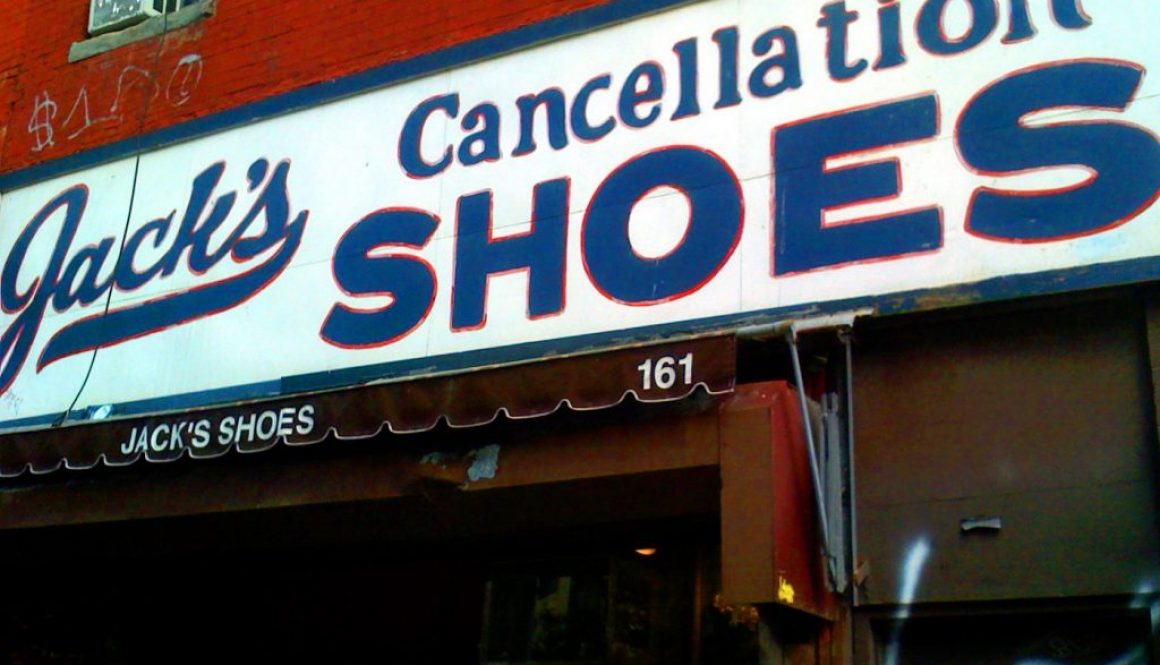
(Foto: Salim Virji - Cancellation Shoes/Flickr – CC BY-SA 2.0)
(Foto: Salim Virji - Cancellation Shoes/Flickr – CC BY-SA 2.0)